
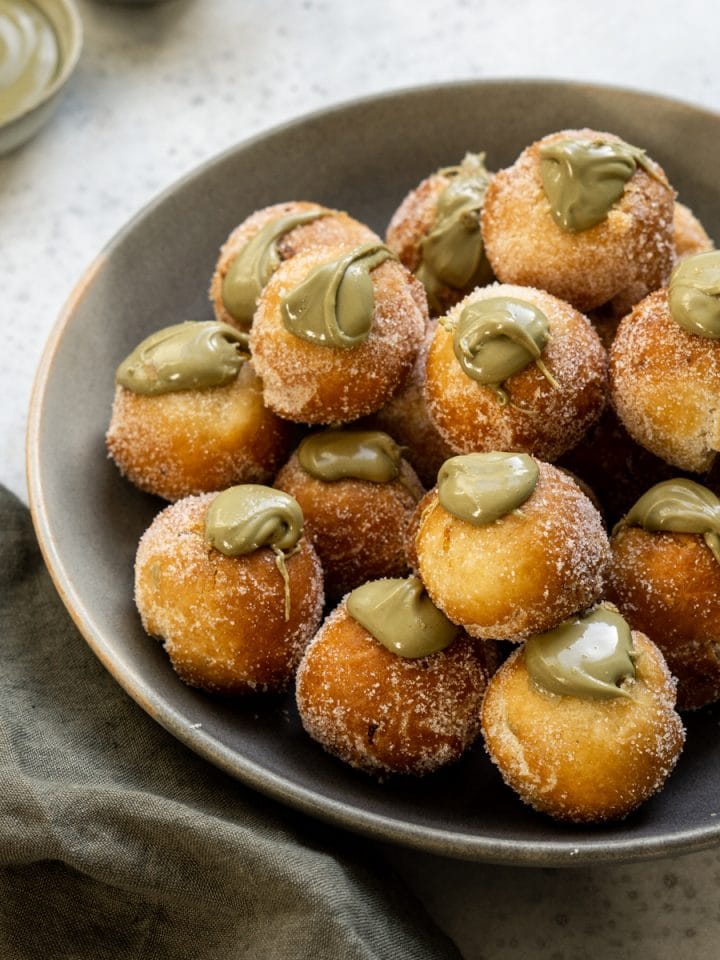
Castagnole, or Italian carnival donuts, are a famous traditional dessert. The chestnut-shaped dough balls are fried, giving them a soft on the inside and crunchy on the outside texture. They're rolled in sugar while still warm.
Their chestnut-like shape is how they get their name (castagne mean chestnuts in Italian), and their soft yet crunchy texture is a big reason why they're such a crowd-pleaser among Italians (especially during carnival time).
What are they?
Castagnole can be described as small donuts, or donut holes, that typically have a shape resembling chestnuts (although I usually make mine a bit bigger). Their name comes from "castagne" which actually means chestnuts!
These donuts are extremely popular at Carnevale--they're made by combining typical donut ingredients into dough, rolling the dough into small balls, and frying them. Once you bite into a castagnole, you'll notice that they are very soft on the inside but slightly crunchy on the outside...this is what makes them so delicious! You can also bake castagnole if you prefer.
Most castagnole recipes finish off by rolling the donut holes in sugar to give them an extra touch of sweetness.
If you're looking for more Carnevale desserts (there are many!) definitely give these fried chiacchiere (fritters) a try, or this migliaccio cake.

What is Carnevale?
Carnevale, or Carnival, is a celebratory festival held in some countries to celebrate the Catholic faith. It's always held in February or March around Easter time, but the dates in which it is held vary depending on when the holiday falls.
What makes this festival unique is that it lasts about two weeks, and is often said to be one of the biggest holidays of the year. It goes from 2 weeks before Lent to Shrove Tuesday.
When attending Carnevale, you can expect to see children dressed in costumes, who celebrate with their families in public squares. Many activities are available during the event including games, plays, music, and of course: food. Castagnole are one of the most popular foods you will find at the festival!
Interestingly, carnevale actually means "without meat". Since Catholics give up meat during Lent, this celebration has a focus on food to allow them to indulge in their favorite decadent dishes before having to give up meat until Easter.
Why you should make castagnole
Here's why you should be making castagnole at home from scratch:
- They are easy to make. It only takes about an hour start to finish to make these tasty carnival donuts, and there aren't too many complicated steps involved.
- They use simple ingredients. The ingredients you need to make these are common, and you more than likely already have many of them in your kitchen. If you don't, you can find them with a quick trip to the store.
- They're tasty. Castagnole are absolutely delicious! Fried to perfection, coated with sugar, and buttery dough--my mouth is watering just thinking about it. It's important to note that these are especially tasty when eaten the day of. They start to lose their flavor after a day or two, so we suggest serving them all the day that you make them if you can.
Ingredients list
- Flour, Eggs, Butter: key ingredients for the dough.
- Sugar: you'll need granulated sugar for the dough, and will also use some at the end to roll the donut holes in.
- Lemon zest: adds a kick of flavor.
- Vanilla extract and rum: you need just a little vanilla and rum to bring an extra depth of flavor to the catagnole.
- Salt: helps enhance the flavor of the other ingredients in the dough.
- Baking powder: allows the dough to rise.
- Oil: you'll use peanut or sunflower oil for frying.

How to make castagnole: step-by-step
Make the dough: To start, add all ingredients except for the oil to a large mixing bowl. Beat with a fork until a ball starts to form, a few minutes. Transfer the dough to a wooden board and add a touch more flour if the dough is moist. Knead with your hands until dough is smooth. Wrap the dough in saran wrap and let rest at room temperature for a half hour.
Make the donut holes: Remove a piece of dough from the ball (about ¼) and roll it into a log. Cut the log into pieces, and roll each piece into one ball. Each ball should weigh about 20 grams. Repeat this process until all the dough is formed into balls.
Fry the castagnole: Heat the oil in a small saucepan. Once hot enough to fry (I always test with a wooden spoon--insert the end of the spoon into the oil - if it starts to bubble, it's ready). Drop about 4-5 balls into the oil. Fry the dough balls until they are golden in color - about 2 minutes. If they are frying too fast, reduce the heat of the oil.
Plate the castagnole: Remove the dough balls from the saucepan, and place on a plate lined with a paper towel.
Repeat this entire process for all of the balls. While the castagnole are frying, place granulated sugar in a small bowl and roll them in the sugar to coat them. Let them cool slightly before serving, and enjoy!
How to store
If you have leftover castagnole, store them in an airtight container at room temperature. I don't suggest keeping them for longer than a day. They taste best when eaten the day they are made and will lose their flavor and texture pretty quickly.

Recipe

Castagnole - Italian Carnival Donuts
Ingredients
- 1 ½ cup (225g) all purpose flour
- 2 eggs large
- 3 tablespoon butter
- ¼ cup granulated sugar plus more for dusting
- zest of one lemon
- 2 teaspoon vanilla extract
- 1 tablespoon rum
- pinch of salt
- 2 teaspoon baking powder
- 500-700 mL peanut oil or sunflower oil for frying
Instructions
- In a large mixing bowl, add all the ingredients except for the oil.
- beat with a fork until a ball starts to form, a few minutes.
- Transfer the dough to a wooden board, add a touch more flour if dough is moist.
- Knead with your hands until dough is smooth, a few minutes.
- Wrap in saran wrap and let rest at room temperature for half hour.
- Remove a piece of dough from the ball (about ¼), and roll into a log.
- Cut the log into pieces, and roll each piece into one ball. Each ball should weigh about 20 grams. Repeat this process until all the dough is formed into balls.
- Heat the oil in a small saucepan. Once hot enough to fry (I always test with a wooden spoon- insert the end of the spoon into the oil - if it starts to bubble, it's ready), drop about 4-5 balls in the oil.
- Fry the ball until they are golden in color - about 2 minutes. If they are frying to fast, reduce the heat of the oil.
- Remove using a skimmer and place the castagnole on a plate lined with paper towel.
- Repeat this process for all the balls.
- While the castagnole are frying, place granulated sugar in a small bowl and roll the castagnole in the sugar to coat them.
- Let them cool slightly, and enjoy!



Leave a Reply